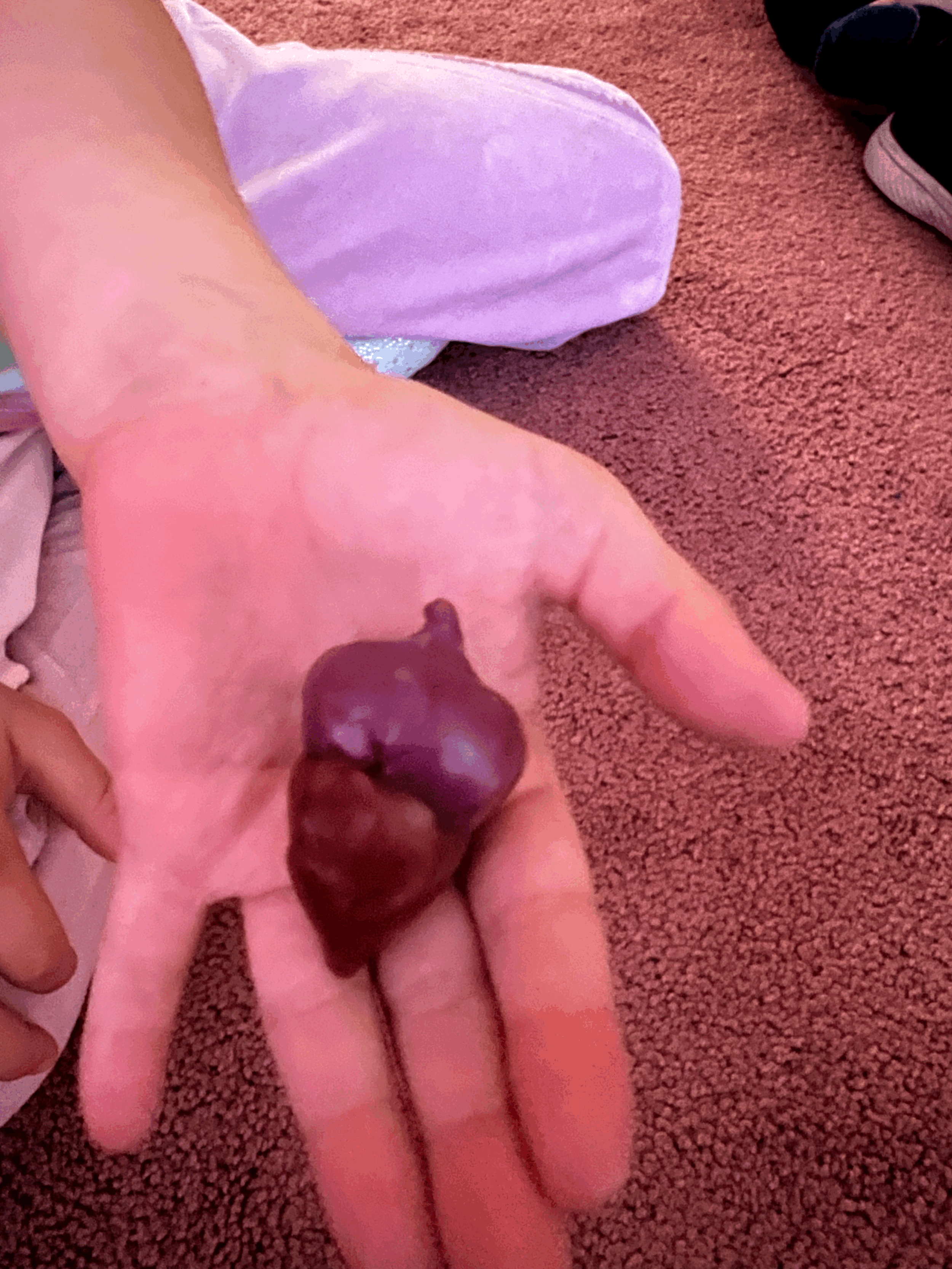
The Golden Gift: Why We Model with Beeswax in First Grade
If you were to step into our classroom on a gray Tuesday morning, you might find a circle of children sitting in expectant silence. Each child holds a small, rectangular slab of beeswax—hard, cold, and unyielding at first. But soon, the room fills with the sweet, honeyed scent of the hive, and something magical begins to happen.
In Waldorf education, beeswax modeling is a cherished staple of the First Grade experience. It is much more than a simple art project; it is a multi-sensory journey that engages the child’s warmth, will, and imagination.
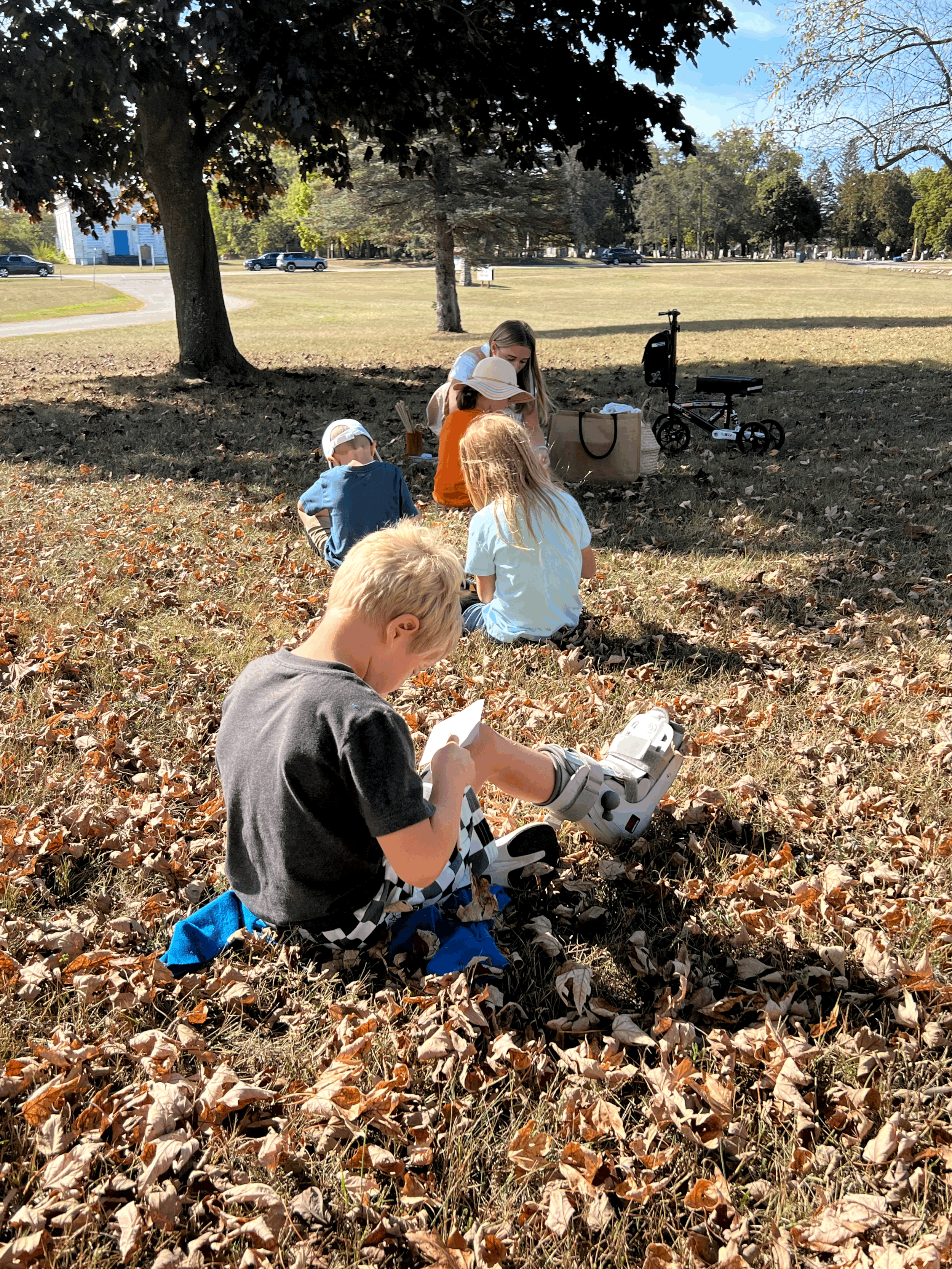
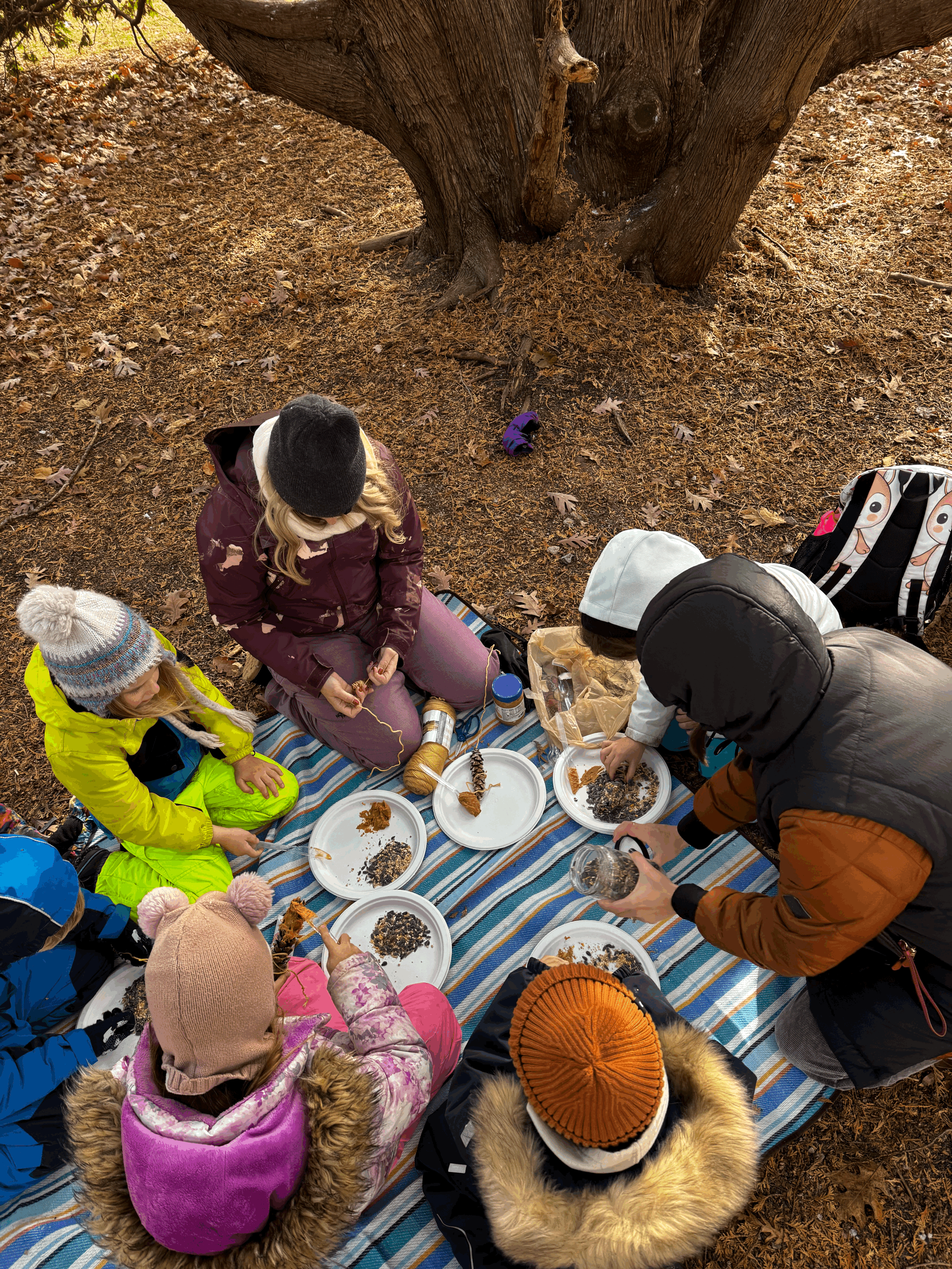
The Great Outdoors: Nature as the Ultimate Classroom
If the indoor environment is a sanctuary for the soul, the outdoor world is the laboratory for the spirit and the gymnasium for the body.
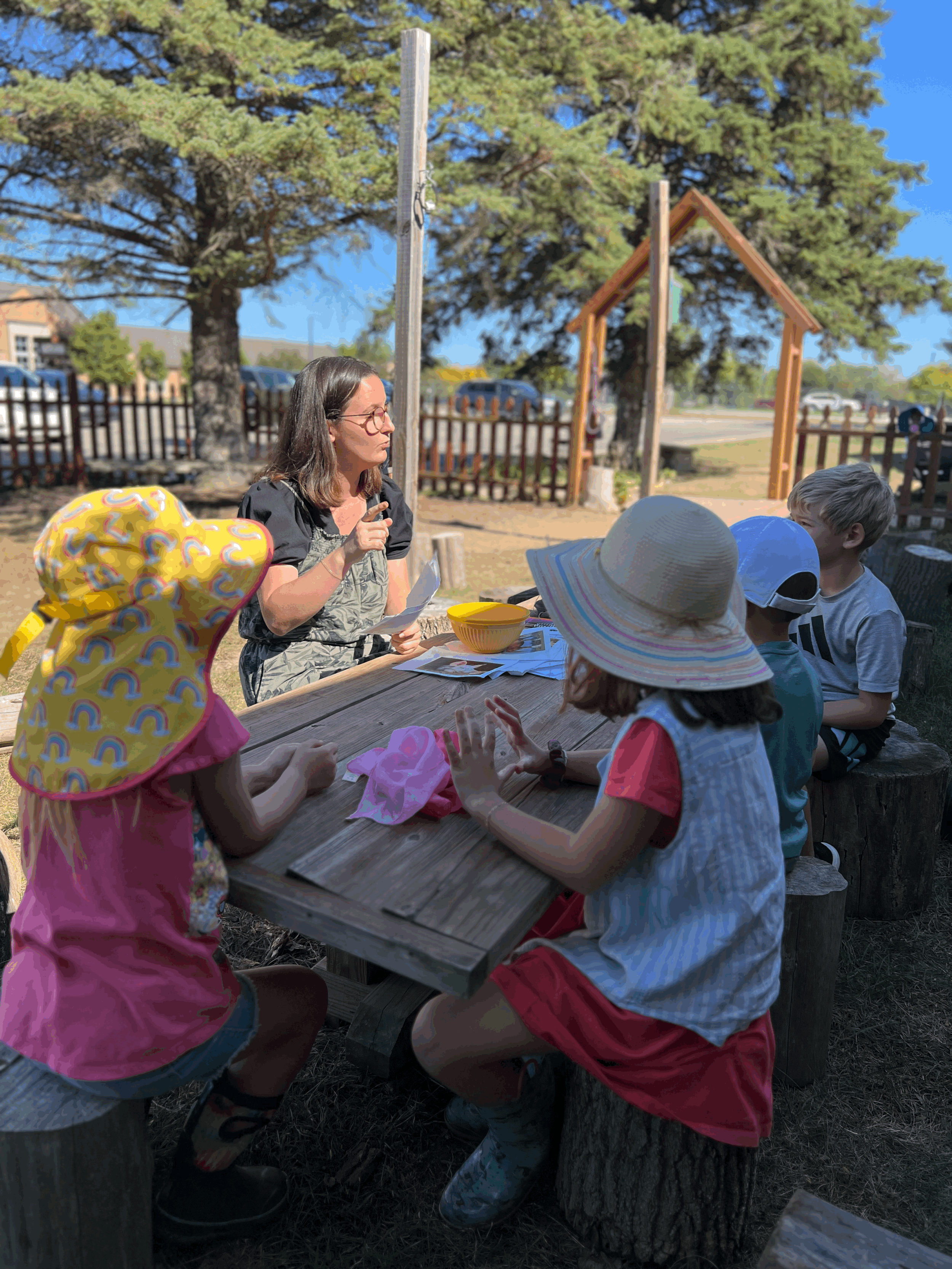
The Song of the World: Foreign Language as Ear Training
In many traditional schools, learning a second language begins with a vocabulary list: "The apple is la manzana." We drill the colors, the days of the week, and the rules of grammar. But in a Waldorf classroom, especially in the early grades, we take a different path. We don't want the children to just know a language; we want them to live it.
The Thinking Hand: The Profound Purpose of Handwork
To an outsider, seeing a room full of first graders—boys and girls alike—knitting colorful scarves might look like a quaint hobby. However, in Waldorf education, Handwork is a vital pedagogical tool. We believe that by engaging the hands in purposeful, complex tasks, we are quite literally "knitting" the brain together.
The Rhythm of the Year: Why We Celebrate Festivals in Waldorf Education
If you were to look at a Waldorf school calendar, you wouldn't just see holidays; you would see a series of deeply intentional Festivals. From the courageous lantern walks of autumn to the joyful dancing around the Maypole in spring, festivals are the "punctuation marks" of our school year.
But these aren't just parties. In Waldorf education, festivals serve a profound pedagogical and communal purpose. They are the ways in which we help children find their place within the cosmos, the community, and their own inner selves.
Why We Wait: The Wisdom of Starting Reading at Age Seven
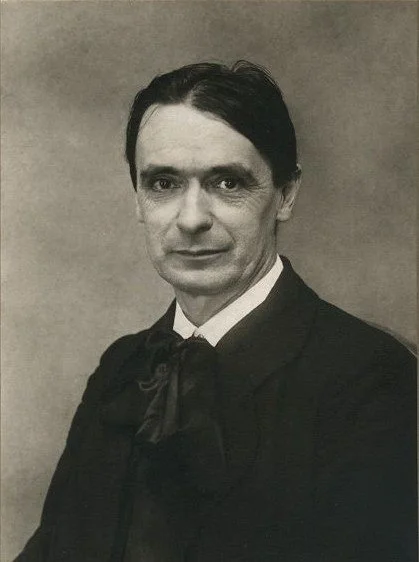
Dr. Rudolf Steiner proposed that while mathematics is rooted in the building blocks of the cosmos, language is a uniquely human creation. Therefore, when a child learns to read and comprehend language, they are undergoing a form of initiation into the human collective. Humans are multi-dimensional, including soul and spirit, therefore learning language and reading ought to reflect that if we want children to be inspired and passionate readers. Learning to read needs to engage the whole self.
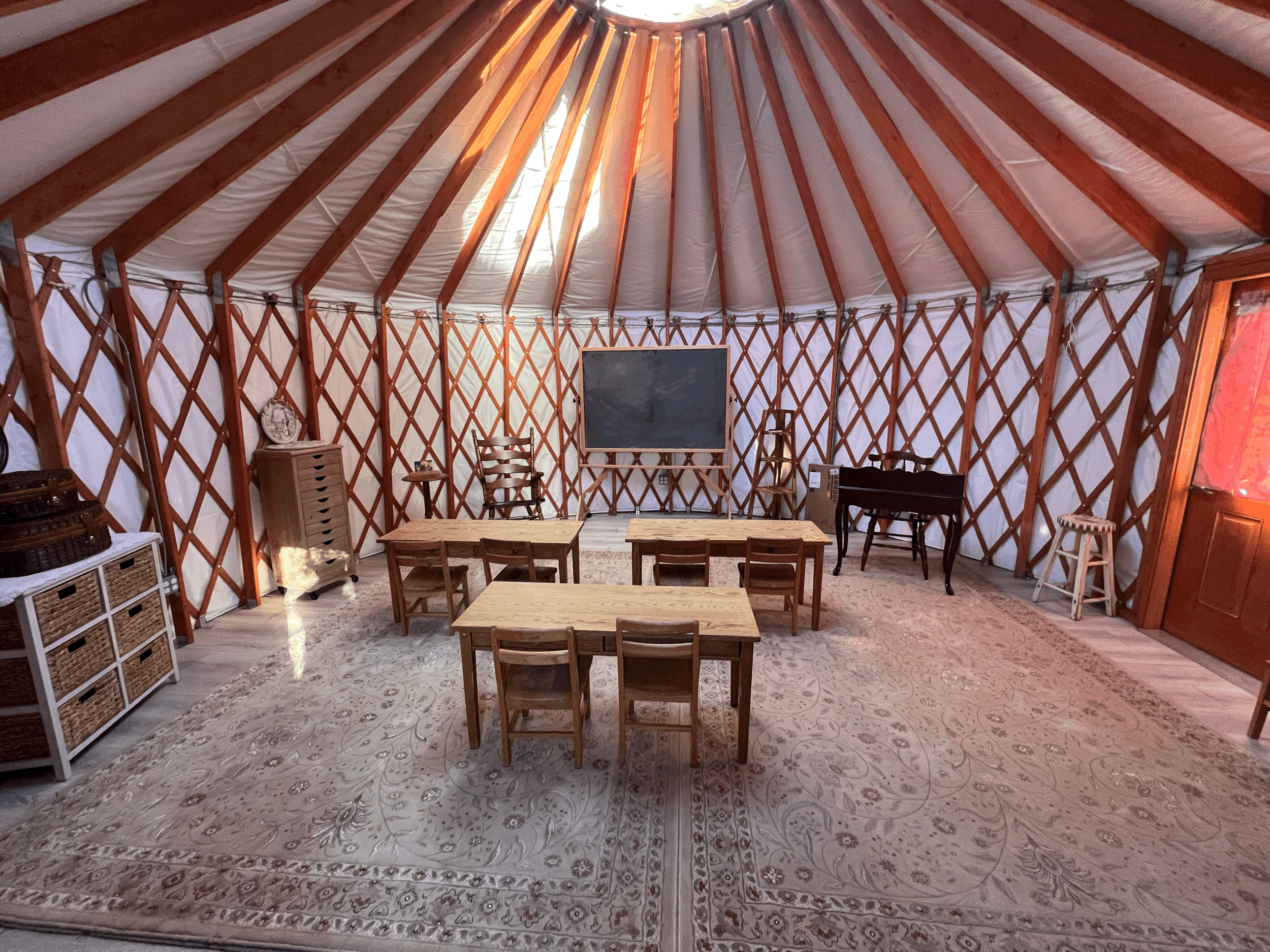
The Waldorf Sanctuary: A Classroom Designed for the Soul
When you step into a Waldorf classroom, your first instinct is often to take a deep, cleansing breath. There is a palpable difference in the energy of the space. As Waldorf teachers, we view the environment as the "third teacher." Every color, texture, and object is chosen with profound intentionality to support the child’s sensory development and inner peace. This is where form meets function, where beauty and utility meet.
Here is a glimpse of what you will—and won't—see in our sanctuary, and the pedagogical "why" behind it.
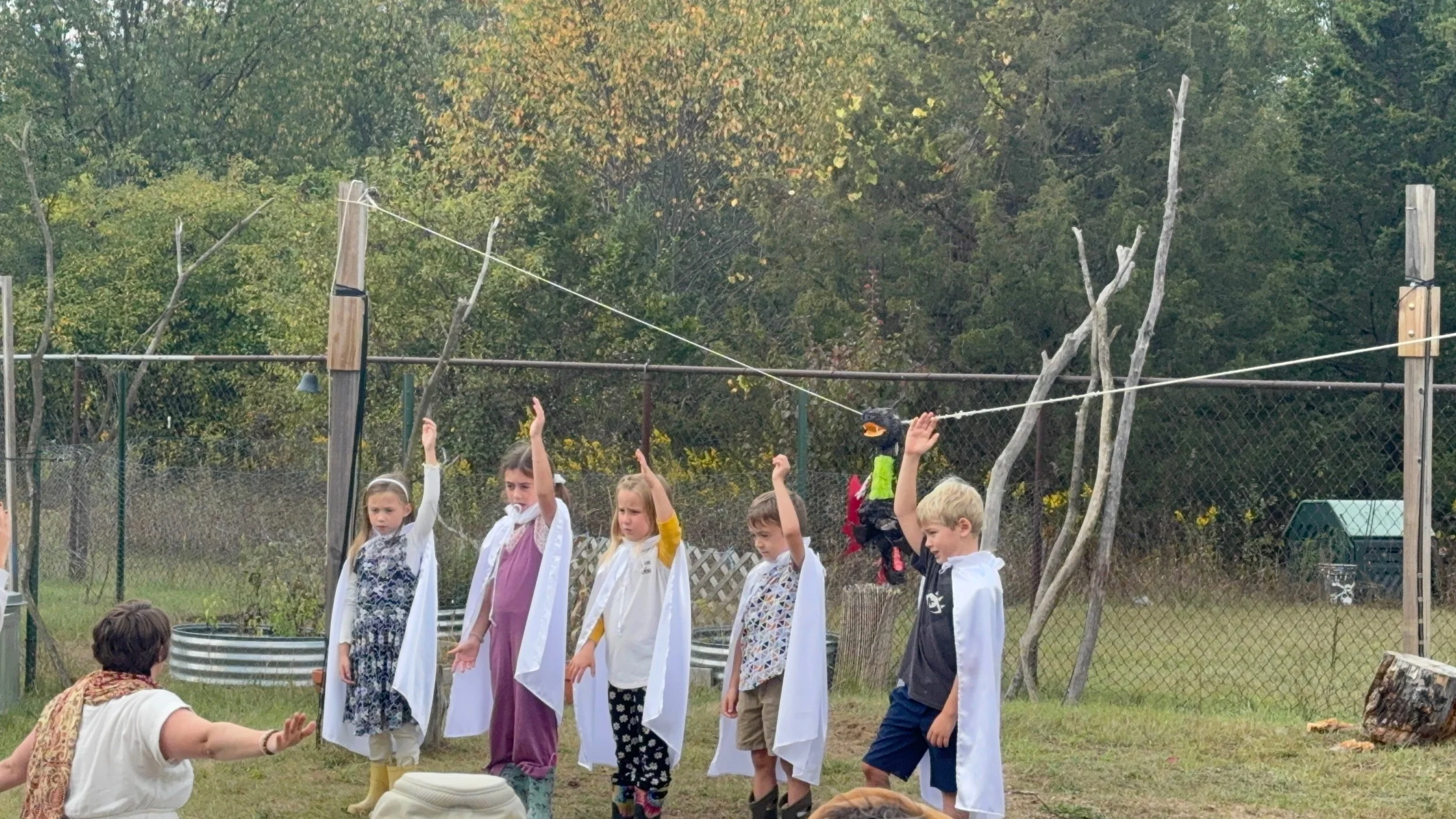
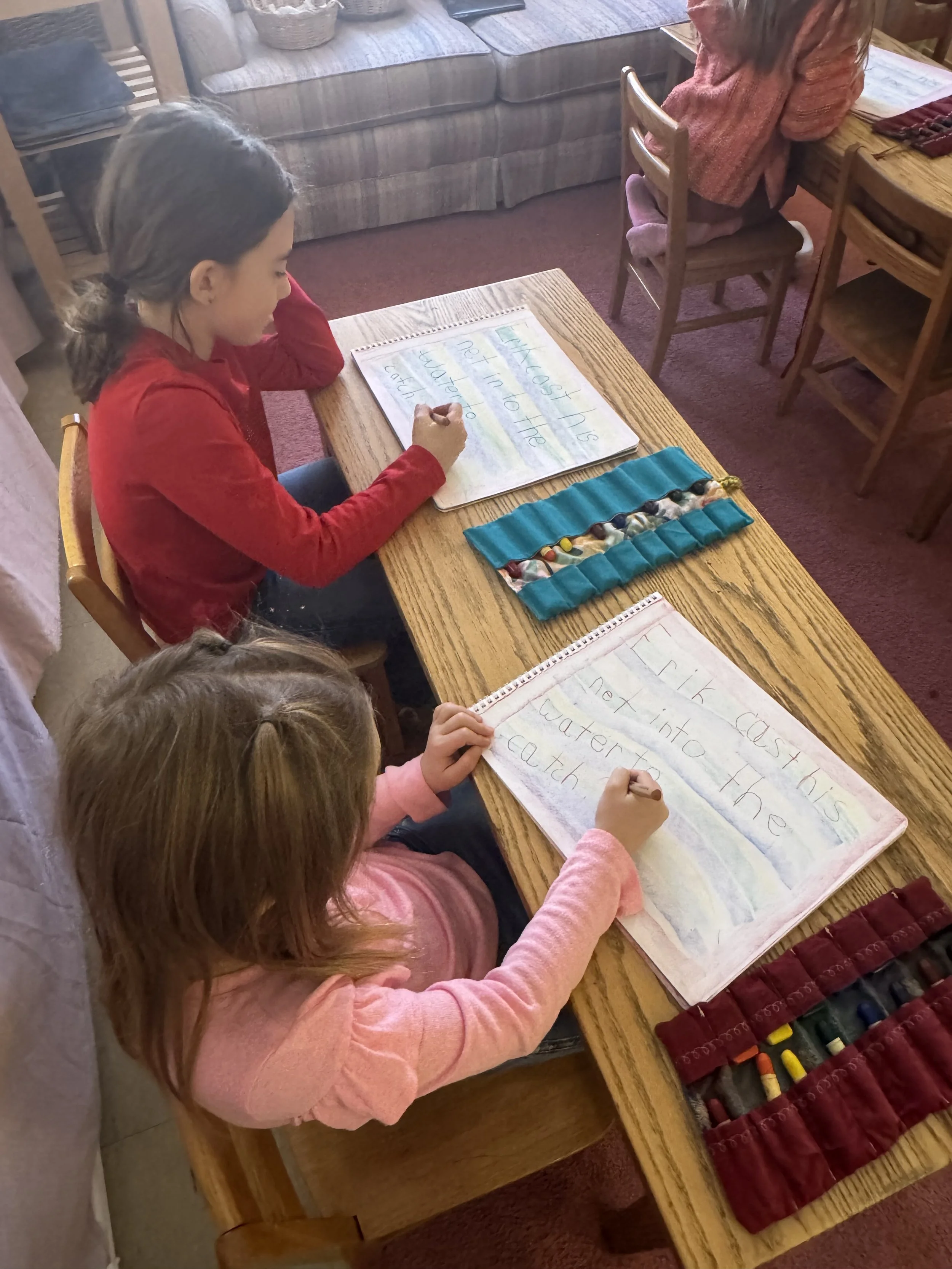
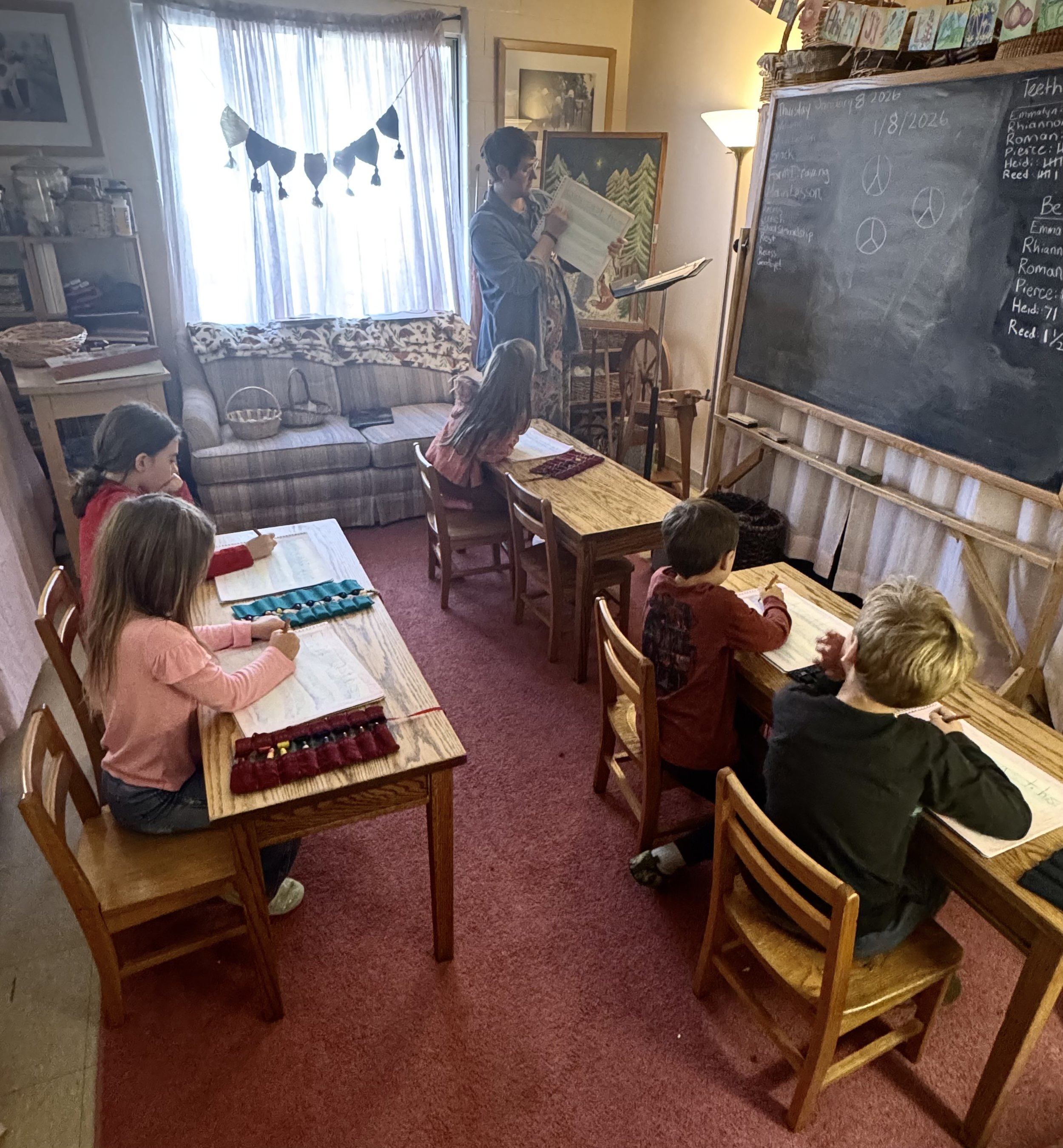
The Living Word: Speech, Writing, and the "Writing-to-Read" Journey
Let’s step into the heart of the Waldorf Language Arts curriculum. In a world that often rushes children to "decode" abstract symbols as early as possible, Waldorf takes a different path—one that mirrors the history of humanity itself.
Before humans had books, we had stories. Before we had the alphabet, we had symbols and art. By following this natural evolution, we ensure that when a child finally picks up a book to read, they aren't just identifying sounds; they are connecting with a world of meaning they already love.
Preserving the Sanctuary: Why Our Classrooms are Media-Free Zones
At Mighty Oaks School, we don’t just limit tech; we create a space where the digital world recedes, allowing the natural world and the child’s own imagination to take center stage.
The Breathing Week: Why Mighty Oaks School Embraces a Rhythmic Schedule
One of the most frequent questions I receive as the Director of Mighty Oaks School is about our unique "stair-step" school week. At Mighty Oaks School, we transition children into formal schooling with a gentle, progressive rhythm: three days for first grade, four days for second grade, and finally five days for third through eighth grade.
The Heart of the Day: Understanding the Waldorf Main Lesson
Let’s pull back the curtain on the most vital part of the day in Waldorf education: the Main Lesson.

The Threshold of the Year: Welcoming New Beginnings the Waldorf Way
As the clock turns toward the New Year, we find ourselves standing at a powerful threshold. In the Waldorf tradition, the transition from December to January is more than just a change of the calendar; it is the culmination of the Twelve Holy Nights—that sacred, quiet time between the Winter Solstice and Epiphany where the veil between the past and the future feels thin.
While the modern world often rushes into "New Year’s Resolutions" with a sense of pressure and self-improvement, the Waldorf home approaches the New Year as a gentle awakening. It is a time to look back with gratitude and forward with wonder, planting seeds of intention that will slowly sprout as the light returns.

The Golden Light: Celebrating a Waldorf Christmas
In a world that often turns Christmas into a season of "getting," the Waldorf approach offers a gentle path back to giving. In our classrooms and homes, we look for the "Golden Thread"—the spirit of love, sacrifice, and wonder that weaves through the winter darkness.
Whether you are honoring the miracle of the Christ child’s birth, the magic of a selfless Santa Claus, or simply the warmth of human connection, a Waldorf Christmas is about cultivating an inner glow that can be shared with the world.

The Return of the Light: Celebrating Yule and Yuletide in the Waldorf Home
For the Waldorf family, Yule is not just a holiday on the calendar; it is an "inner fire" that we tend while the world outside sleeps in the cold.
What is Waldorf Education?
At its core, Waldorf education is about nurturing the whole child. It's not simply about filling young minds with facts; it's about awakening their capacities and strengthening their will. We believe that true learning engages the head, heart, and hands.

The Four Temperaments
Exploring human personality has a long history, with ancient theories like Hippocrates' humourism laying the groundwork. Rudolf Steiner revisited this concept, integrating it into his spirit-science view of the human being and applying it significantly in Waldorf education.